



Bax
BAX (BCL2-associated X protein) is a pro-apoptotic member of the BCL-2 family that regulates programmed cell death through mitochondrial apoptosis and functions as a critical determinant of cellular survival following apoptotic stimuli[1][2]. BAX forms heterodimers with anti-apoptotic BCL-2 proteins, and the balance between BAX and BCL-2 influences mitochondrial outer membrane permeabilization (MOMP), cytochrome c release, and activation of the intrinsic apoptotic pathway[2][3][4]. Mechanistically, BAX belongs to the pore-forming executioner subgroup of the BCL-2 family and undergoes activation in response to cellular stress signals, including p53-dependent apoptotic signaling, thereby promoting mitochondrial membrane permeabilization and irreversible cell death commitment[1][3][5]. In disease models, dysregulated BAX activity contributes to the pathophysiology of cancer, neurodegenerative disorders, and other apoptosis-associated conditions, making mitochondrial apoptosis a major target for therapeutic intervention[3][4][6]. Compared with related BCL-2 family isoforms, BAX is distinguished by its direct executioner function in apoptosis, whereas many alternative BCL-2 family isoforms display variable anti-apoptotic or context-dependent activities that remain incompletely characterized[3]. A notable BAX isoform, BaxΔ2, retains pro-apoptotic activity despite N-terminal alterations, highlighting functional diversity within the BAX locus and providing experimental models for studying non-canonical apoptotic mechanisms[7]. For experimental applications, BAX-dependent signaling is widely used to evaluate mitochondrial apoptosis, while therapeutic strategies targeting BCL-2 family interactions, including BH3 mimetics, are actively investigated to modulate BAX-mediated cell death in cancer research[3][6].
References:
- [1]. Brady HJ, et al. Bax. The pro-apoptotic Bcl-2 family member, Bax. Int J Biochem Cell Biol. 1998 Jun;30(6):647-50. [Content Brief]
- [2]. Bax gene information from NCBI.
- [3]. Warren CFA, et al. BCL-2 family isoforms in apoptosis and cancer. Cell Death Dis. 2019 Feb 21;10(3):177. [Content Brief]
- [4]. Vogler M, et al. The BCL2 family: from apoptosis mechanisms to new advances in targeted therapy. Signal Transduct Target Ther. 2025 Mar 21;10(1):91. [Content Brief]
- [5]. Maes ME, et al. BAX to basics: How the BCL2 gene family controls the death of retinal ganglion cells. Prog Retin Eye Res. 2017 Mar;57:1-25. [Content Brief]
- [6]. Huang Y, et al. The adjuvant treatment role of ω-3 fatty acids by regulating gut microbiota positively in the acne vulgaris. J Dermatolog Treat. 2024 Dec;35(1):2299107. [Content Brief]
- [7]. Rabezanahary H, et al. Live virus neutralizing antibodies against pre and post Omicron strains in food and retail workers in Québec, Canada. Heliyon. 2024 May 21;10(10):e31026. [Content Brief]
-
Bax Related Products (217)
Related Products (217)

-
Antibodies (3)
-
Astin B
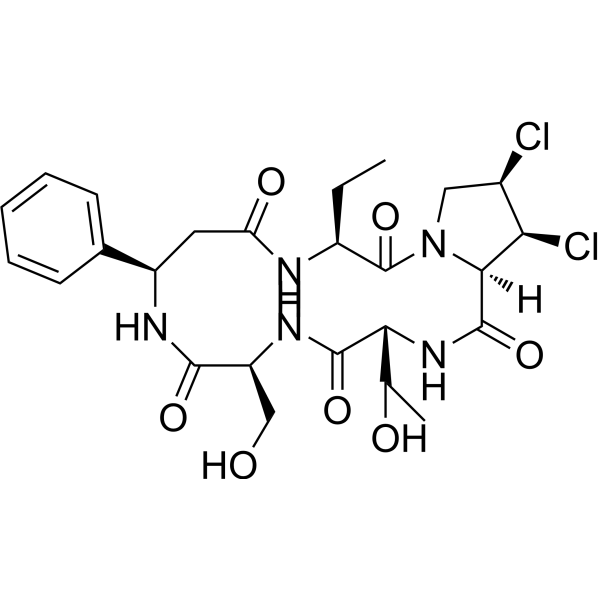 0 ImagesCat. No.: HY-P3148CAS No.: 151201-76-2Astin B is a orally active and potent cyclic pentapeptide, that can be isolated from Aster tataricus. Astin B has hepatotoxic effects in vitro and in vivo and that hepatic injury was primarily mediated by apoptosis in a mitochondria/caspase-dependent manner. Astin B induces autophagy in L-02 cells, increases LC3-II and decreases p62 expression.
-
TKL002
 0 ImagesTKL002 is a blood-brain barrier-permeable inhibitor of the CTH/H2S/NF-κB/EMT signaling axis. TKL002 induces G2/M phase cell cycle arrest and apoptosis in glioblastoma cells. TKL002 inhibits the migration and invasion of glioblastoma cells by upregulating E-cadherin and downregulating N-cadherin and vimentin. TKL002 is applicable to relevant research on glioblastoma.
-
COX/5-LO-IN-2
 0 ImagesCat. No.: HY-181061COX/5-LO-IN-2 is a COX2, EGFR, COX1, 5-LOX, BRAF and FAK inhibitor with IC50 of 1.22 μM, 2.5 μM, 2.95 μM, 4.65 μM, 7.4 μM, 12.2 μM, respectively. COX/5-LO-IN-2 induces cell growth arrest at G2/M phase. COX/5-LO-IN-2 triggers apoptotic activity by up-regulating proapoptotic proteins p53, Bax, and caspase-7 and down-regulating anti-apoptotic protein Bcl-2. COX/5-LO-IN-2 can be used for the research of breast cancer.
-
EGFR-IN-109
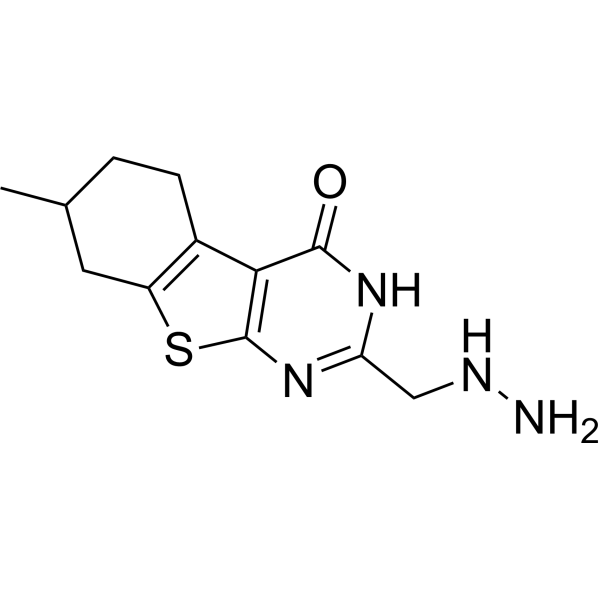 0 ImagesCat. No.: HY-162360CAS No.: 3019971-97-9
-
CDK1/2/4-IN-1
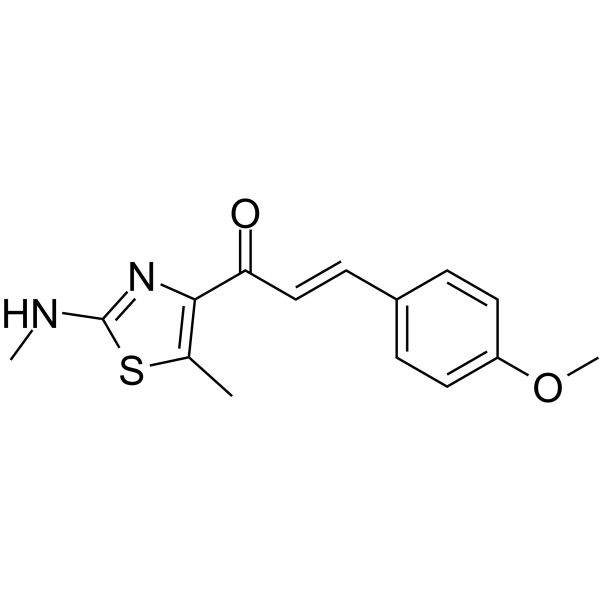 0 ImagesCat. No.: HY-146253CAS No.: 2414633-49-9CDK1/2/4-IN-1 (compound 3a) is a potent CDK inhibitor with IC50 values of 1.47, 0.78 and 0.87 μM for CDK1, CDK2 and CDK4, respectively. CDK1/2/4-IN-1 arrests cell cycle at G2/M phase and induces apoptosis. CDK1/2/4-IN-1 elevates Bax, caspase-3, P53 levels and decreases Bcl-2 level. CDK1/2/4-IN-1 can be used for cancer research.
-
HDAC-IN-91
 0 ImagesCat. No.: HY-175021HDAC-IN-91 is a multiple inhibitor of HDAC (IC50 = 134.22 nM for HDAC1, 66.29 nM for HDAC2), carbonic anhydrase (CA) (Ki = 72.03 nM for CA IX, 50.76 nM for XII), and tubulin polymerization ( IC50 = 2.56 μM). HDAC-IN-91 inhibits PARP1 and increases the Bax/Bcl-2 ratio. HDAC-IN-91 blocks the cell cycle at the G2/M phase and induces apoptosis through a mitochondrial apoptosis activation mechanism. HDAC-IN-91 can exert potent cytotoxic activity through tubulin polymerization inhibition. HDAC-IN-91 can be used in breast, colorectal, cervical and lung cancer research.
-
Dehydrobruceine B
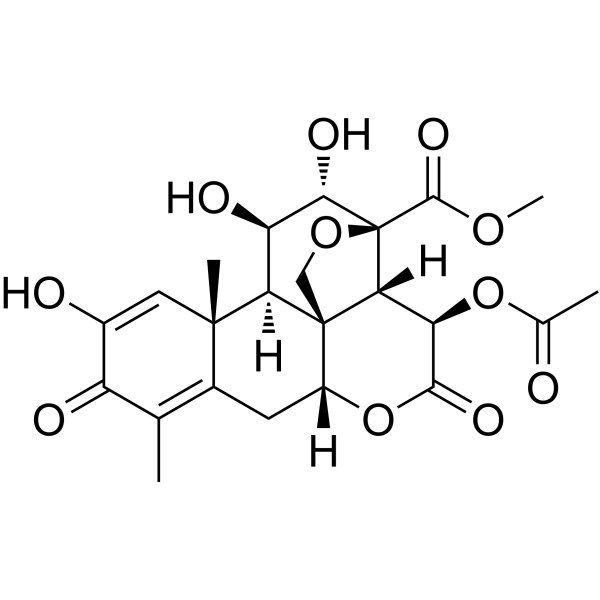 0 ImagesCat. No.: HY-N10313CAS No.: 53730-90-8Dehydrobruceine B, a quassinoid, can be isolated from Brucea javanica. Dehydrobruceine B shows a synergistic effect with Cisplatin (HY-17394) to induce apoptosis via mitochondrial method. Dehydrobruceine B increases apoptosis-inducing factor (AIF) and Bax expression and suppresses Keap1-Nrf2.
-
EGFR/BRAFV600E-IN-6
 0 ImagesCat. No.: HY-180154CAS No.: 3120155-78-1EGFR/BRAFV600E-IN-6 (Compound 7c) is a dual EGFR/BRAFV600E inhibitor with IC50 values of 0.12 and 0.05 μM. EGFR/BRAFV600E-IN-6 can activate caspase-3/8/9, unregulate Bax expression and downregulate Bcl-2 levels. EGFR/BRAFV600E-IN-6 can induce apoptosis and shows antioxidant activity. EGFR/BRAFV600E-IN-6 can be used for the research of cancer, such as colon cancer.
-
Multitarget AD-IN-8
 0 ImagesCat. No.: HY-189262Multitarget AD-IN-8 is a blood-brain barrier-penetrant, orally active multitarget inhibitor. Multitarget AD-IN-8 inhibits abnormal Tau phosphorylation at Thr181 and Ser396 sites and attenuates NF-κB phosphorylation. Multitarget AD-IN-8 downregulates BACE1 expression to reduce Aβ production, inhibits the Bax/Bcl-2 pathway, and suppresses Caspase-1 activation. Multitarget AD-IN-8 attenuates p38, ERK1/2, and JNK phosphorylation and inhibits Aβ25-35-induced Apoptosis. Multitarget AD-IN-8 exhibits neuroprotective effects against Aβ25-35-induced injury, ameliorates learning and memory deficits in AD mouse models, and alleviates hippocampal neuronal pathological damage. Multitarget AD-IN-8 can be used for research on Alzheimer's disease.
-
Aurora kinase-IN-15
 0 ImagesCat. No.: HY-184386Aurora kinase-IN-15 is a potent dual Aurora A and Aurora B kinase inhibitor. Aurora kinase-IN-15 has broad-spectrum anticancer activity and low toxicity to normal cells. Aurora kinase-IN-15 induces G2/M phase arrest, apoptosis, and activates the intrinsic apoptotic pathway through upregulation of Caspase 3 and Bax, along with downregulation of Bcl-2. Aurora kinase-IN-15 can be used for the study of breast cancer, hepatocellular carcinoma, colorectal cancer and prostate cancer.
-
CHNQD-01522
 0 ImagesCat. No.: HY-181675CHNQD-01522 is a microtubule inhibitor targeting the colchicine binding site on β-tubulin. CHNQD-01522 binds to the colchicine binding site on β-tubulin, inhibits microtubule polymerization, and evades P-glycoprotein transport in cancer cells. CHNQD-01522 inhibits proliferation, suppresses tumor cell colony formation, arrests cell cycle in G2/M phases, and induces apoptosis in cancer cells. CHNQD-01522 upregulates of Bax and activation of caspase-9 and caspase-3. CHNQD-01522 shows anti-tumor efficacy in subcutaneous and orthotopic hepatocellular carcinoma xenograft tumor models. CHNQD-01522 can be used for the research of hepatocellular carcinoma.
-
EGFR-IN-201
 0 ImagesCat. No.: HY-181659CAS No.: 3103654-99-2EGFR-IN-201 is a potent EGFR inhibitor, with an IC50 of 0.091 μM against wild-type EGFR; for mutant EGFR variants, the IC50 values of EGFRT790M, EGFRL858R and EGFRC797S are 0.147 μM, 0.221 μM and 0.703 μM, respectively. EGFR-IN-201 inhibits EGFR downstream signaling proteins AKT1 (IC50 = 0.225 μg/mL) and ERK1 (IC50 = 0.705 μg/mL). EGFR-IN-201 induces G0/G1 cell cycle arrest, apoptosis and low-level necrosis in cancer cells. EGFR-IN-201 is applicable to research on cancers such as colon cancer.
-
EGFR-IN-134
 0 ImagesCat. No.: HY-168623EGFR-IN-134 (compound 3f), a triazolo[3,4-a]isoquinoline derivative, is a potent EGFR inhibitor with an IC50 of 0.023 µM. EGFR-IN-134 induces apoptosis and necrosis. EGFR-IN-134 initiates cell cycle arrest at the G2/M and pre-G1 phases, downregulates anti-apoptotic protein Bcl2 and upregulates pro-apoptotic proteins: p53, Bax, and caspases 3, 8, and 9. EGFR-IN-134 shows antiproliferative and anticancer activity.
-
Isomeldenin
 0 ImagesCat. No.: HY-N22057CAS No.: 186892-52-4Isomeldenin is a natural product derived from the leaves of Azadirachta indica. Isomeldenin possesses antifungal activity and inhibits pustule formation in Puccinia arachidis. Isomeldenin exhibits antitumor activity, showing cytotoxic activity against SK-OV-3, MCF-7, and 3SKBr cells, and also decreases Bax and increases Bcl2 expression. Isomeldenin can be used in research related to fungal infections and has potential for research related to coronavirus infection.
-
CDL36
 0 ImagesCat. No.: HY-187706CAS No.: 951529-42-3CDL36 is a BAX inhibitor with an EC50 of 23.6 µM. CDL36 inhibits pro-apoptotic peptide-induced mitochondrial outer membrane permeabilization (MOMP). CDL36 exerts cytoprotective effects against Doxorubicin (HY-15142A)-induced cell death.
-
CDC25A/NF-κB-IN-1
 0 ImagesCat. No.: HY-184446CDC25A/NF-κB-IN-1 is an effective dual-target inhibitor of CDC25A and NF-κB, and is a prodrug of Pt(IV). CDC25A/NF-κB-IN-1 has anticancer activity and low cytotoxicity to normal cells. CDC25A/NF-κB-IN-1 can trigger a variety of anticancer mechanisms, including S phase cell cycle arrest, mitochondrial endogenous apoptosis, endoplasmic reticulum stress, autophagy-dependent ferroptosis. CDC25A/NF-κB-IN-1 has good safety and can be used for ovarian cancer research.
-
EGFR/HER2-IN-20
 0 ImagesCat. No.: HY-184301EGFR/HER2-IN-20 is a dual EGFR/HER2 inhibitor. EGFR/HER2-IN-20 induces G1/S phase cell cycle arrest by downregulating CCND1. EGFR/HER2-IN-20 induces cell apoptosis by upregulating BAX and caspase-3. EGFR/HER2-IN-20 inhibits cancer cell migration. EGFR/HER2-IN-20 can be used in the research of cervical cancer and breast cancer.
-
Topoisomerase I-IN-23
 0 ImagesCat. No.: HY-187459Topoisomerase I-IN-23 is a topoisomerase I inhibitor with anticancer activity. Topoisomerase I-IN-23 competitively binds to the hydrophobic pocket at the Topo I-DNA interface, stabilizes the covalent DNA-Topo I complex, downregulates Topo I protein expression in a concentration-dependent manner, induces S-phase cell cycle arrest in tumor cells, regulates the expression of apoptosis-related proteins Bax, Bcl-2 and cleaved caspase-3 to trigger apoptosis, and inhibits the migration and invasion of tumor cells. Topoisomerase I-IN-23 exhibits in vivo antitumor efficacy in xenograft models. Topoisomerase I-IN-23 can be used in research related to colorectal cancer, lung cancer and hepatocellular carcinoma.
-
Desethylamiodarone hydrochloride (Standard)
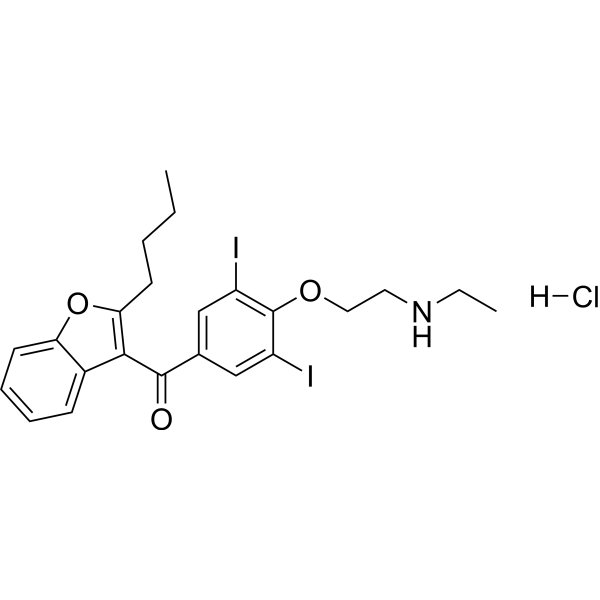 0 ImagesCat. No.: HY-130353RCAS No.: 96027-74-6Synonyms: N-Desethylamiodarone hydrochloride (Standard); LB 33020 hydrochloride (Standard)Desethylamiodarone hydrochloride (Standard) (N-Desethylamiodarone hydrochloride (Standard); LB 33020 hydrochloride (Standard)) is the analytical standard of Desethylamiodarone hydrochloride (HY-130353). This product is intended for research and analytical applications. Desethylamiodarone hydrochloride (N-Desethylamiodarone hydrochloride; LB 33020 hydrochloride) is the major active metabolite of Amiodarone (HY-14187) generated via CYP3A4 metabolism. Desethylamiodarone hydrochloride downregulates p‑Akt, p‑Bad and Bcl‑2, upregulates Bax, promotes mitochondrial release of cytochrome c, activates caspase‑3 and cleaves PARP‑1, thereby inducing cell cycle arrest and apoptosis. Desethylamiodarone hydrochloride can be used in cervical cancer-related research.
-
EGFR-IN-170
 0 ImagesCat. No.: HY-175588EGFR-IN-170 (Compound 5c) is an EGFR inhibitor with an IC50 of 5.17 μM. EGFR-IN-170 induces apoptosis by inhibiting Bcl2 expression and activating Bax expression with a significantly increased ratio of Bax/Bcl2. EGFR-IN-170 has potent anticancer activity and inhibits the cell growth of resistant lung cancer cells.




